

Project Details
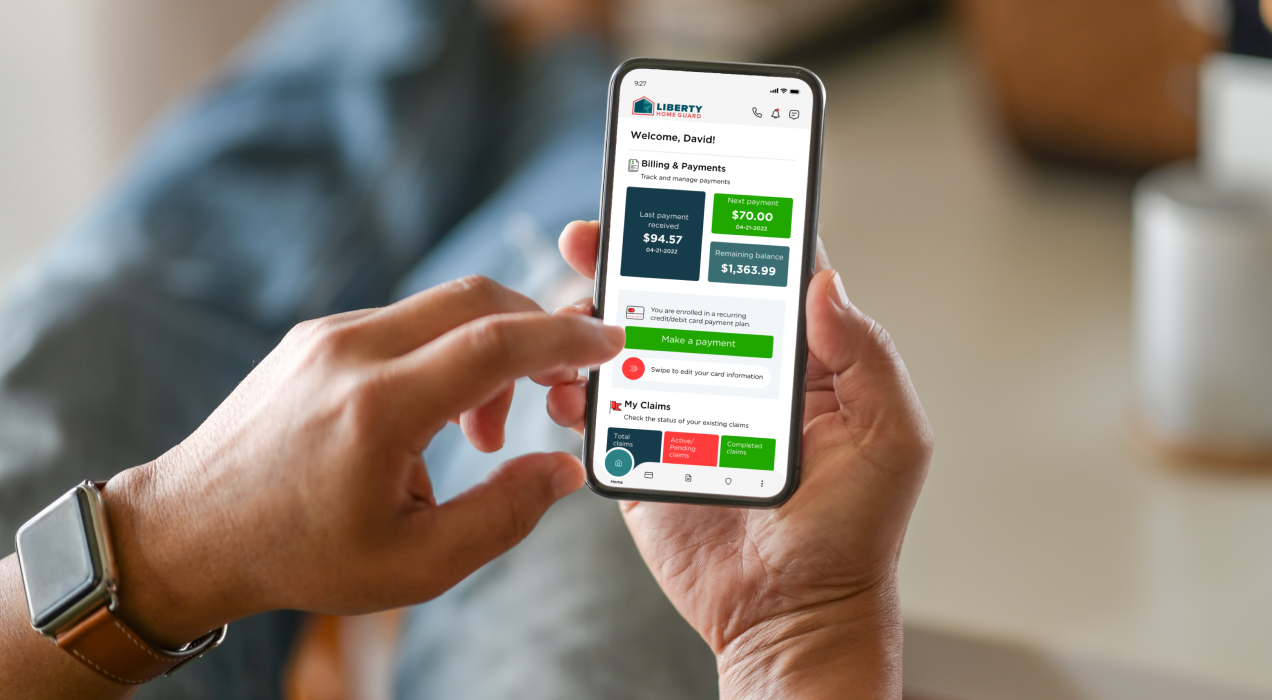
Liberty Home Guard Mobile App
Project Overview:
As the lead designer for Liberty Home Guard's first mobile app, I created a companion experience to their existing web portal, enabling customers to manage their home warranties directly from their smartphones with enhanced accessibility and convenience.
The Challenge:
Liberty Home Guard had an established customer web portal that provided comprehensive warranty management capabilities, but customers increasingly wanted the convenience of mobile access.
Key Mobile Experience Goals:
Through stakeholder discussions and customer feedback, I identified several core objectives:
1. Mobile Accessibility
- Provide customers with on-the-go access to their warranty information
- Enable filing and managing claims from anywhere, especially during urgent situations
- Deliver a native mobile experience optimized for smartphones
2. Feature Parity with Web
- Ensure all critical web portal functionality was available on the mobile app
- Maintain consistency in information and capabilities across platforms
- Optimize the interface for smaller screens without sacrificing functionality
3. Improved Engagement
- Increase customer interaction with warranty services
- Enhance service accessibility to drive customer satisfaction
- Provide a modern digital experience that aligned with customer expectations
-
Design Process:
1. Research & Discovery:
I began with a comprehensive research phase to understand user needs and business objectives:
- Stakeholder Interviews:
Conducted sessions with product owners, customer service leaders, and executives to define strategic goals - User Research:
Analyzed customer service logs and support tickets to identify common pain points with the web experience - Competitive Analysis:
Evaluated mobile apps in both warranty services and adjacent industries (insurance, home services) to identify best practices and opportunities - User Surveys:
Collected feedback from existing customers about their mobile preferences and priorities -
2. Key Insights:
The research revealed several crucial insights that guided my design approach:
- Contextual Priority:
78% of service requests came during stressful moments when a home system or appliance failed - Feature Utilization:
Despite the web portal's extensive feature set, 82% of user activity focused on just three core actions: filing new claims, checking claim status, and viewing warranty coverage details - Expectations Gap:
Users frequently compared their warranty experience to more mature mobile services like banking or ride-sharing - Technical Comfort:
The user base spanned multiple generations with varying levels of technical expertise
3. Wireframing & Prototyping:
My design process progressed through three distinct fidelity stages, each serving a unique purpose in the evolution of the app. I began with low-fidelity sketches to quickly explore navigation models and map critical user journeys, focusing particularly on emergency service requests that required immediate action. These early explorations helped validate core concepts with stakeholders before significant resources were invested. As concepts solidified, I developed mid-fidelity wireframes that established content hierarchy and introduced progressive disclosure patterns to manage complex information on small screens. Through internal feedback sessions, I refined these interaction patterns before moving to high-fidelity prototypes. The final prototyping phase introduced polished visuals and interactive elements that underwent rigorous usability testing with current customers, ultimately resulting in a refined experience optimized for mobile performance.
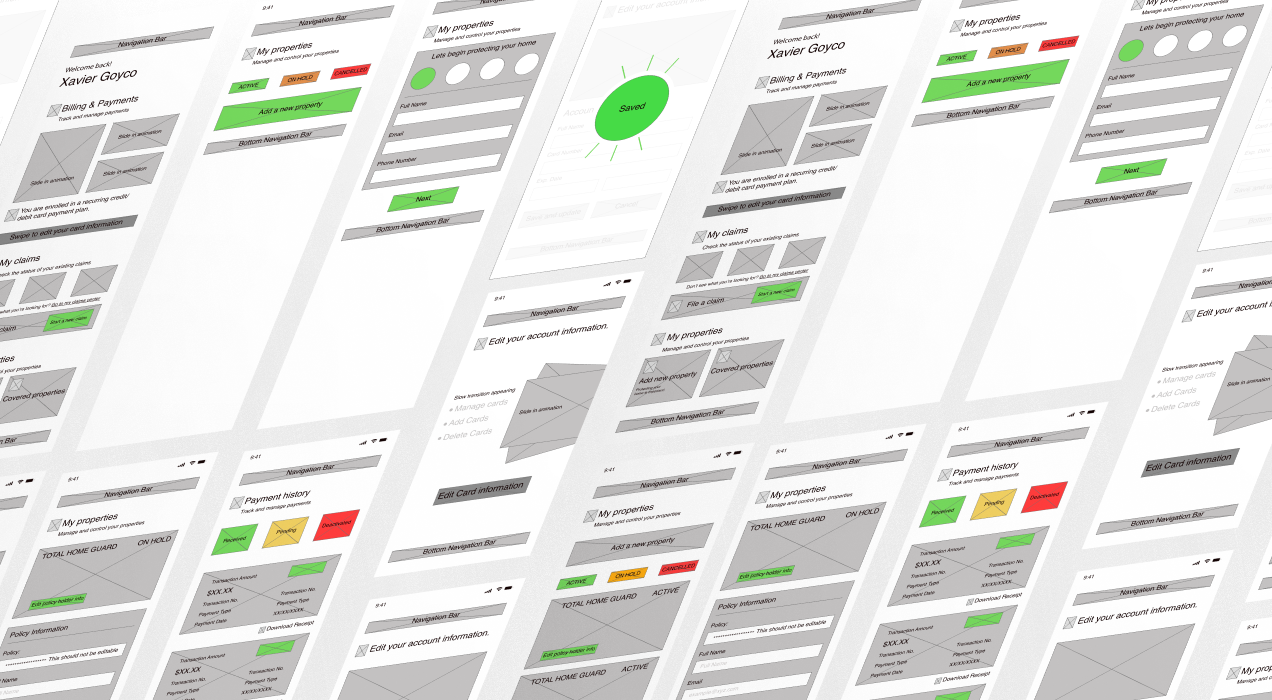
The development of the Liberty Home Guard app was driven by the need to provide users with flexible, mobile access to their home warranties. While the web portal remains valuable, the app offers a more immediate and intuitive solution. Features like real-time updates, service request tracking, and direct support communication were implemented to enhance customer satisfaction and align with users' mobile-first expectations.
Key Design Solutions:
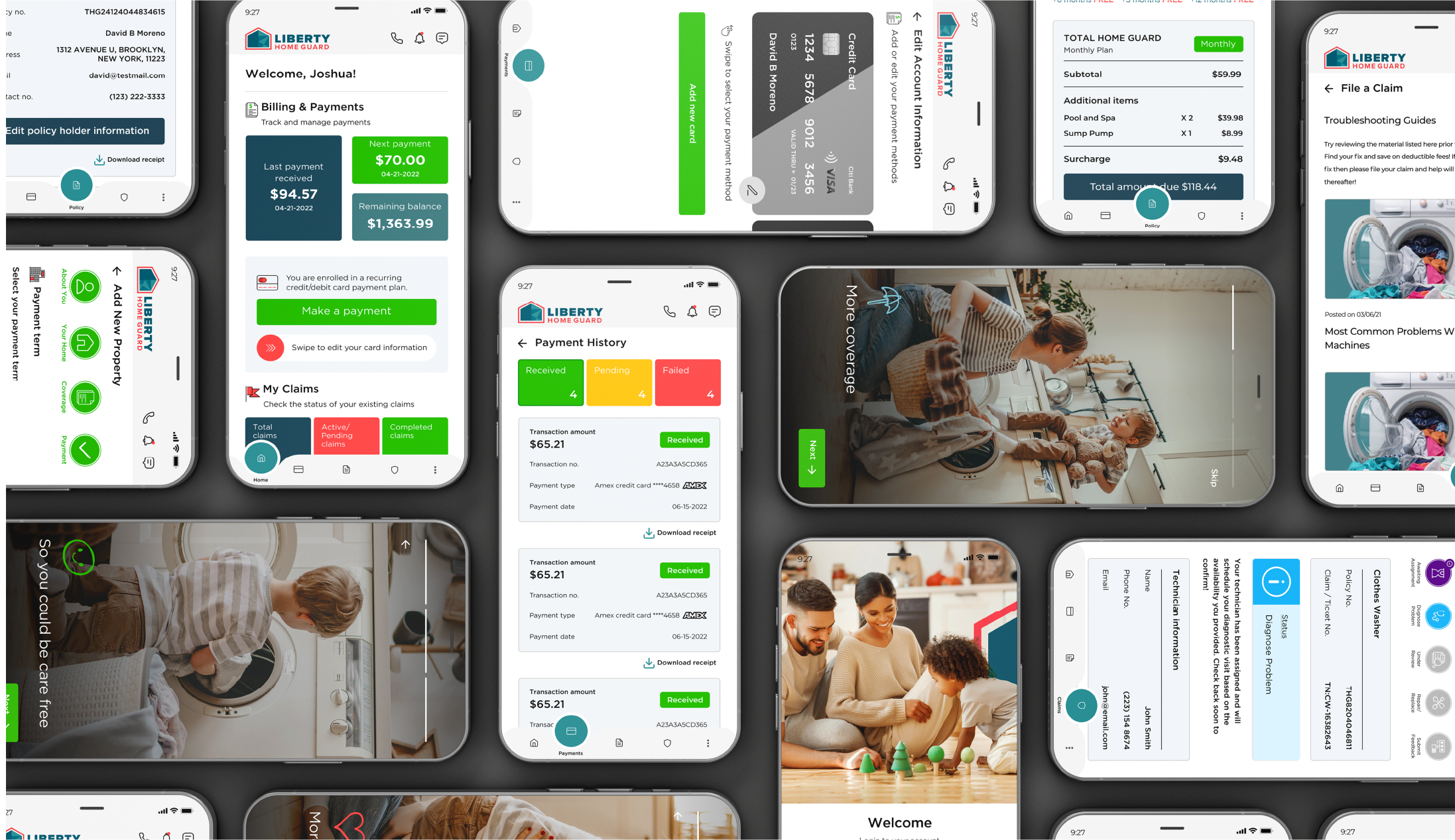
Mobile Warranty Management
- Design Decision:
Created an intuitive dashboard displaying warranty coverage details, expiration dates, and covered items.
- Problem Solved:
Provided quick access to critical warranty information when customers needed it most.
- Design Rationale:
Customers frequently needed to reference coverage details during service calls and emergencies.
Streamlined Claims Submission
- Design Decision: Developed a simple step-by-step claim submission process with the ability to attach photos.
- Problem Solved: Enabled customers to file claims immediately from anywhere.
- Design Rationale: Reducing the time between issue discovery and claim submission improves customer satisfaction and service response times.
Appointment Scheduling & Tracking
- Design Decision: Implemented an interactive calendar with technician arrival windows and real-time updates.
- Problem Solved: Eliminated uncertainty about when service would be performed.
- Design Rationale: Customer feedback showed appointment transparency was a key factor in overall satisfaction with warranty services.
Results & Impact:
The mobile app successfully extended Liberty Home Guard's digital presence and provided customers with the mobile access they expected:
- 47% of active customers downloaded the app within the first month
- 38% increase in digital engagement compared to web-only users
- 26% of claims now submitted outside of business hours
-
Lessons & Future Directions:
What Worked Well:
The native mobile experience provided significant improvements in customer engagement. Users particularly appreciated having their warranty information readily available and the ability to submit claims on the go. The app's intuitive interface received positive feedback for making complex warranty information easy to understand.
What I Would Approach Differently:
If starting over, I would:
- Create more extensive onboarding to help users understand all available features
- Develop stronger visual cues to help users navigate between related sections
- Build more robust push notification preferences to accommodate different user preferences
Future Roadmap:
Based on initial user feedback and analytics, I've identified opportunities for enhancing the app:
- AI Troubleshooting:
Introducing AI-powered troubleshooting based on user inputs when filing a claim, providing step-by-step instructions for potential DIY fixes - Maintenance Reminders:
Personalized notifications for seasonal maintenance tasks - Service History Insights:
Providing data visualizations of service patterns and property maintenance
Reflection:
This project reinforced the importance of translating web experiences to mobile in a way that respects the unique context of mobile usage. Rather than simply shrinking the web experience, success came from reimagining how customers interact with their home warranty when they're away from their computers.
The most valuable insight was seeing how mobile access transformed when and how customers engaged with their warranties. By making information and services available anywhere, we enabled customers to be more proactive about their home maintenance and more responsive when issues arose.
Preview:
Experience The Design!